
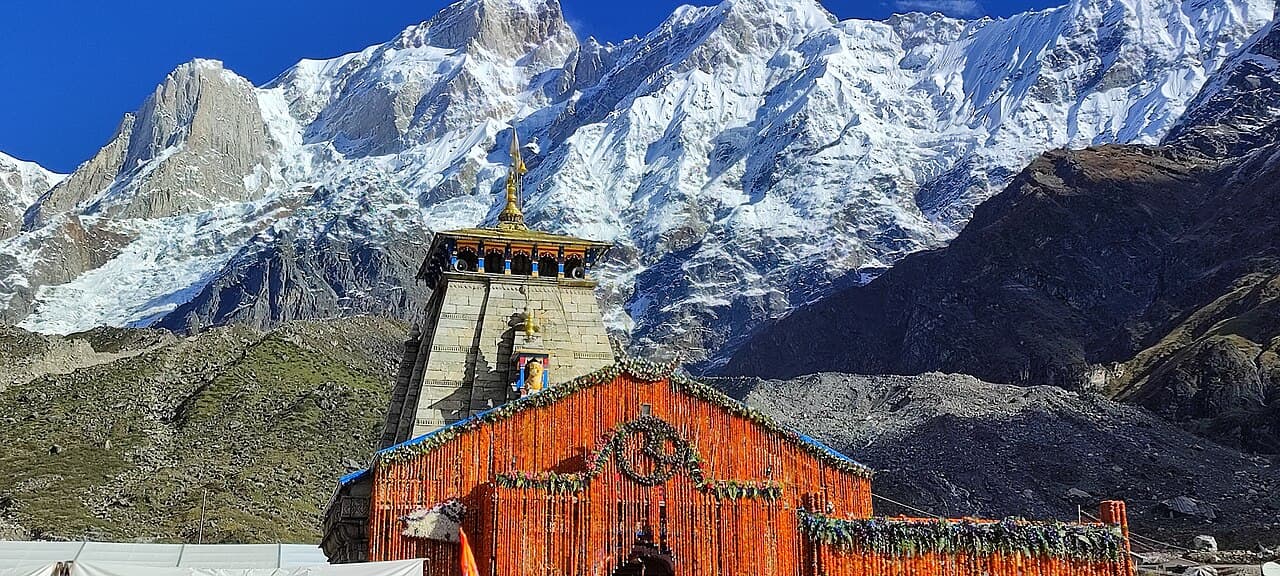
Kedarnath Temple
Kedarnath, Uttarakhand
Kedarnath Temple, nestled in the Garhwal Himalayas at an altitude of 3,583 metres above sea level near the Mandakini River in Uttarakhand, is one of the most awe-inspiring pilgrimage sites in the world.
Temple details
- About this temple
As one of the twelve Jyotirlingas of Lord Shiva and a key site in the Chota Char Dham Yatra, it draws lakhs of devout pilgrims each year despite its challenging high-altitude location. According to tradition, the original temple was built by the Pandavas, and was later revived by the revered philosopher Adi Shankaracharya in the 8th century CE. The presiding deity — a three-sided lingam — is believed to be Swayambhu (self-manifested). Surrounded by snow-capped peaks, glaciers, and the roar of the Mandakini River, the spiritual atmosphere of Kedarnath is utterly unique. The trek from Gaurikund spans approximately 17–18 km uphill through breathtaking Himalayan scenery. Due to extreme winters, the temple closes between November and April each year, with the deity ceremonially transferred to Ukhimath. The 2013 Kedarnath floods severely damaged the surrounding region, yet the temple itself survived miraculously — a fact that deepened its divine significance among devotees.
- Deity
Lord Shiva (Kedarnath – Lord of the Field)
- Temple type
Jyotirlinga, Chota Char Dham
- Architectural style
North Indian (Himalayas stone architecture)
- Established
Ancient; revived by Adi Shankaracharya (8th century CE)
- Festivals
- Temple Opening Day (Akshaya Tritiya, April–May)
- Maha Shivaratri
- Shravan Mondays
- Navaratri
- Diwali (Closing Ceremony)
- Managed by
Badrinath-Kedarnath Temple Committee (Uttarakhand Government)
Location
Kedarnath, Uttarakhand, India